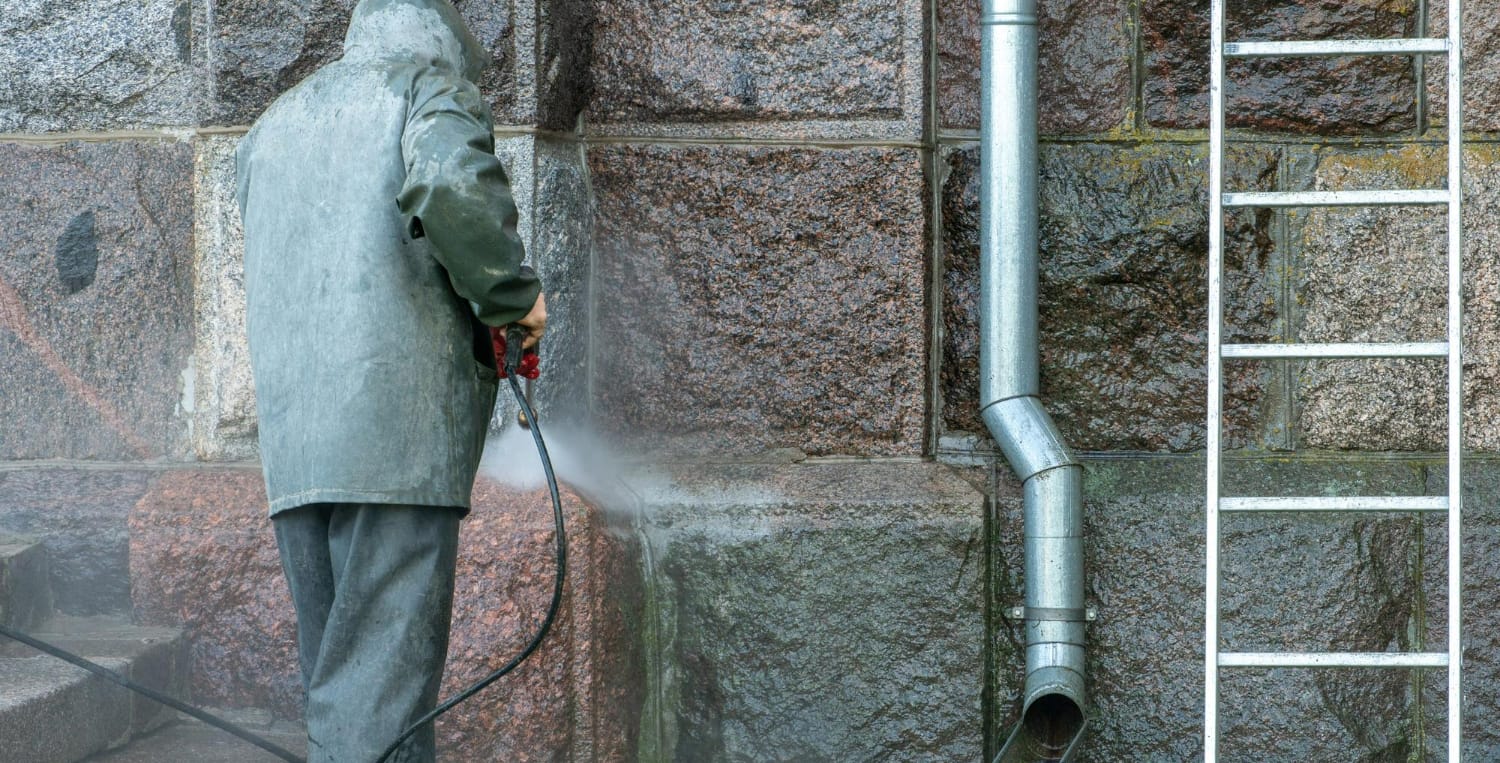
You pull into the driveway and see it before anyone else does: tire marks, oil drips, a film of dirt that never quite rinses off with the hose. You’ve thought about renting a machine, but weekends are precious and you don’t want stripes, etching, or a patchy clean that makes things look worse. Then you start pricing it out and get quotes that are all over the map. What should a 100 ft driveway really cost to pressure wash—and how do you make sure it looks evenly new again?
Left alone, oil and tire polymers bond deeper into pores, algae gets slick in shaded areas, and rust can spread. DIY rentals can lack the flow rate to clean evenly, which leads to zebra striping. Aim too high on pressure and you can scar asphalt or open the pores of concrete so it gets dirty faster. Aim too low and you waste hours for a “meh” result. And if a contractor only uses a wand without uniform equipment or the right detergents, you can pay good money for a finish that looks blotchy within days.
Use a simple pricing framework, ask a few smart questions, and choose a pro who pairs the right chemistry with commercial equipment. That combination cleans deeper, protects your surface, and often costs less than you think once you factor time, rental fees, and results. If you want a fast, transparent quote, Pro H2O Pressure Wash makes it easy to get an accurate price from photos and a couple of measurements:
What a “100 ft driveway” really costs Price is driven by area, not just length. A 100-foot driveway can be narrow or double-wide.
Typical sizes
- Single-lane: about 100 ft x 10 ft = ~1,000 sq ft
- Double-wide: about 100 ft x 20 ft = ~2,000 sq ft
Average market ranges (concrete or asphalt, normal soil)
- 1,000 sq ft: $150–$350
- 2,000 sq ft: $300–$700
With heavy staining (oil, rust, tire marks) or hot-water cleaning
- 1,000 sq ft: $300–$600
- 2,000 sq ft: $600–$1,200
Quick driveway cost calculator
- Measure length x width for square footage.
- Choose a rate based on condition:
- Light to average soil: $0.15–$0.35 per sq ft
- Heavy stains or specialty chemistry: $0.30–$0.60 per sq ft
- Compare to the contractor’s minimum fee ($100–$200 is common) and use the higher figure.
Examples
- 100 x 10 ft, average soil at $0.25/sq ft = $250
- 100 x 20 ft, average soil at $0.20/sq ft = $400
- 100 x 10 ft, heavy oil at $0.45/sq ft = $450
What changes the price
- Surface type and condition: Concrete can take more pressure than asphalt or pavers; etched or spalled surfaces require care.
- Stains: Oil, rust, fertilizer, tannins, and tire marks need pretreatments and dwell time; hot water speeds results.
- Access and slope: Tight spaces, long hose runs, and steep grades add setup time.
- Water logistics and regulations: Supplying water or reclaiming wastewater (some cities require it) raises costs.
- Add-ons: Paver joint re-sanding, weed treatment, sealing, or post-clean brightening.
Typical add-ons
- Degreaser/pretreatments: $0.05–$0.15 per sq ft
- Rust removal or specialty chemistry: $50–$200+ per area, or $0.25–$1.00 per sq ft affected
- Paver re-sanding: $0.50–$1.50 per sq ft
- Sealing after cleaning: $0.75–$2.00 per sq ft
- Wastewater recovery (if required): $50–$150
Expert points that protect your driveway and your budget
- Request a commercial surface cleaner for uniform, swirl-free results. It prevents striping, cleans faster, and often saves labor.
- Let the chemistry work. Professional pretreatments and the right dwell time lift oils and tire polymers so you don’t need damaging pressure.
- Match method to material:
- Concrete: usually 2,500–3,500 PSI with 4+ GPM, detergent, and a surface cleaner
- Asphalt: lower pressure with detergent-forward cleaning and thorough rinsing
- Pavers: moderate pressure, protect joints, re-sand and consider sealing afterward
- Rinse smart, protect smarter. Shield garage door bottoms, nearby plants, and raw wood; avoid forcing water under thresholds.
- Consider sealing. After a deep clean, sealing slows future staining and makes maintenance washes faster and cheaper.
- Bundle services. Combine a driveway wash with a house wash, patio, or sidewalks to beat minimums and lower per-square-foot pricing.
- Timing matters. Off-peak scheduling (weekday or shoulder seasons) can unlock better availability and rates.
Two quick scenarios
- Fresh curb appeal before listing: 100 x 20 ft, light soil, plus front walk. At $0.22/sq ft, 2,200 sq ft = ~$484. Fast turnaround, even finish, better photos.
- Tough oil spots under parked cars: 100 x 10 ft with pretreat and hot water. At $0.45/sq ft, 1,000 sq ft = $450. Targets oil without etching.
DIY or hire a pro?
- DIY: Rental machine ($50–$100/day), optional surface cleaner attachment ($25–$40/day), detergents ($10–$40), plus 3–6 hours of your time. Works for light soil on small areas if you’re comfortable with the equipment.
- Pro: Faster, even results; proper chemistry; lower risk of damage; the right nozzles, GPM/PSI, and heat. Worth it for large areas, pavers, heavy stains, or when you need a consistent, photo-ready finish.
How to get a firm, fair quote in minutes
- Send width and a couple of photos (wide shot + close-ups of stains).
- Ask about pretreatments, equipment (surface cleaner, hot water), and stain expectations.
- Confirm whether sealing or paver re-sanding is recommended.
If you want this handled quickly and done right, Pro H2O Pressure Wash offers straightforward, photo-based estimates and expert guidance on stain removal, paver care, and sealing. Start here.
Bottom line
- Single-lane 100 ft driveway (about 1,000 sq ft): $150–$350 for normal soil; more with heavy stains.
- Double-wide 100 ft driveway (about 2,000 sq ft): $300–$700 for normal soil; more with heavy stains. Use the simple calculator above, then choose a pro who prioritizes uniform equipment, stain chemistry, and surface safety—so your driveway looks clean, even, and welcoming the first time.
