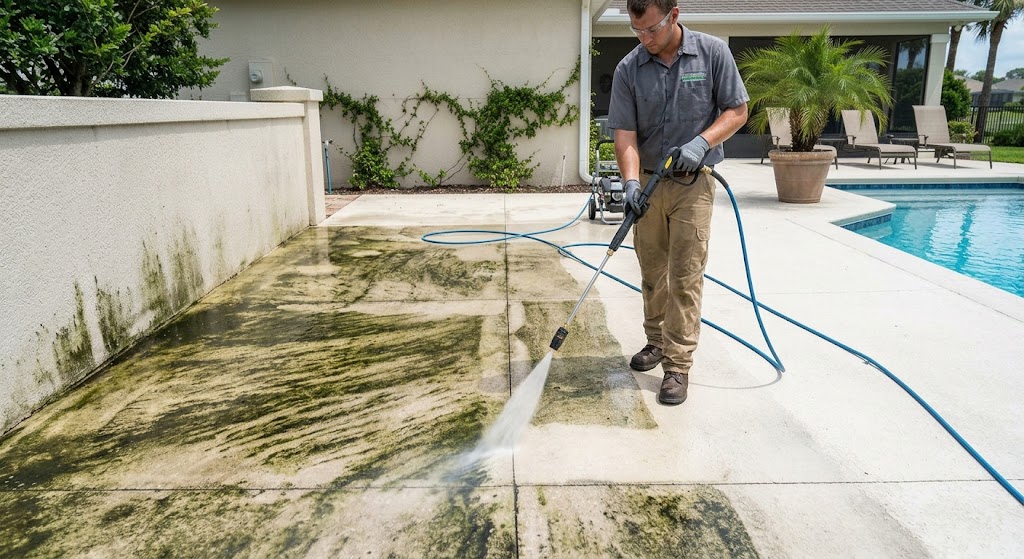
If you’ve noticed green or black streaks creeping across your terrace, exterior walls, or poolside concrete, you’re not alone. In humid coastal climates like Myrtle Beach and Conway, SC, algae buildup is one of the most common — and most frustrating — issues property owners deal with. It returns quickly, can make surfaces dangerously slippery, and often resists simple rinsing. Finding the “best” algae cleaner isn’t just about picking a product off a shelf; it depends on the surface, the severity of the buildup, and the technique used to apply it. With professional concrete pressure washing in Myrtle Beach, Pro H2o Pressure Washing helps homeowners and businesses understand what actually works — and why.
Why Algae Grows on Terraces, Walls, and Poolside Concrete
Algae thrives in environments with consistent moisture, shade, and porous surfaces that trap organic material. Terraces and exterior walls near landscaping or tree cover often stay damp longer after rain, creating ideal conditions for growth. Poolside concrete is especially vulnerable since it experiences regular water exposure, splash-out, and limited direct sunlight in certain areas.
Common Signs of Algae Buildup
- Green or black discoloration on concrete, stone, or stucco
- A slippery or slick texture, particularly near pool edges
- A musty or earthy odor near walls or shaded terraces
- Staining that reappears shortly after rain or sprinkler use, similar to patterns seen in driveway pressure washing cases
- Grout lines or surface joints appearing darker than the surrounding area
Why Poolside Areas Are Especially Prone
Pool environments combine several algae-friendly conditions at once. Chlorine splash-out, constant humidity, and shaded equipment areas all contribute to faster regrowth. Because poolside surfaces are also high-traffic and often walked on barefoot, algae buildup here isn’t just a cosmetic concern — it can affect everyday safety.
What Makes an Algae Cleaner Effective (Without Damaging Surfaces)
Not all algae treatments are created equal, and using the wrong product or pressure level can do more harm than good. Harsh, undiluted chemical treatments may strip sealants, discolor stone, or damage surrounding landscaping. A more measured approach typically works best — one that targets algae at the surface level while protecting the material underneath.
Key Qualities to Look For
- A formulation that’s surface-safe for concrete, natural stone, or stucco
- Effectiveness against algae, mildew, and general organic buildup
- Eco-conscious ingredients that are generally safer around pets, plants, and pools
- Compatibility with either pressure washing or soft washing methods, depending on the surface
It’s worth noting that results can vary depending on how long algae has been present and how porous the surface is, so outcomes that work well on one terrace may look different on another.
DIY Algae Cleaning vs. Professional Treatment
When DIY May Be Appropriate
For light, early-stage algae on small sections of a terrace or wall, a basic surface cleaner and gentle scrubbing may be enough to manage the problem temporarily.
When Professional Service Is Recommended
Recurring algae, large poolside areas, or structural walls often call for a more controlled approach. Incorrect pressure settings during DIY pressure washing can etch concrete, damage protective sealants, or push algae spores deeper into porous material rather than removing them. This is typically where professional soft washing services or pressure washing make the most sense — particularly for larger or more delicate surfaces. For a deeper comparison of the two methods, see our guide on soft washing vs. pressure washing.
Our Process for Removing Algae from Terraces, Walls, and Poolside Surfaces
- Surface Assessment – We evaluate the material type, the severity of algae growth, and nearby landscaping or pool features before beginning.
- Pre-Treatment Application – An algae-targeting solution is applied to help break down buildup at the surface level.
- Controlled Pressure or Soft Washing – Pressure and technique are matched to the surface, whether it’s durable concrete or more delicate stone and stucco.
- Rinse and Inspection – Surfaces are rinsed thoroughly, with a final check for any missed spots or remaining residue.
- Optional Sealing Recommendation – In some cases, sealing a surface afterward may help slow future algae regrowth, particularly in shaded or high-moisture areas.
Why Choose Pro H2o Pressure Washing
Property owners across the Grand Strand choose Pro H2o Pressure Washing for a combination of local experience and careful technique. A few reasons clients return to us:
- Hands-on experience with the specific algae and humidity conditions found throughout the Myrtle Beach and Conway area
- Eco-friendly products formulated to be safer around pools, pets, and landscaping
- Trained technicians who adjust pressure and method based on surface type rather than using a one-size-fits-all approach, whether on terraces or full residential pressure washing projects
- Transparent communication from the first estimate through the final walkthrough
- A fully licensed and insured team that treats every property with care
Algae Removal Services in Conway, SC and Surrounding Areas
Conway’s tree coverage and humid microclimate make it particularly prone to algae buildup on terraces, retaining walls, and shaded concrete areas. Properties near wooded lots or with limited direct sunlight often see algae return faster than those in more open areas. Pro H2o Pressure Washing proudly serves Conway alongside nearby communities including Carolina Forest, Socastee, Forestbrook, and greater Myrtle Beach — see our full areas we serve page for details — helping local homeowners and businesses keep outdoor surfaces clean, safe, and presentable year-round.
Frequently Asked Questions
What is the best way to remove algae from a terrace?
A combination of a surface-safe pre-treatment solution and properly calibrated pressure or soft washing typically works best, since it targets algae without damaging the material underneath.
Is pressure washing safe for poolside concrete?
Yes, when the pressure and technique are matched appropriately to the surface. Poolside concrete can be sensitive, so a measured approach is generally recommended.
How often should algae-prone areas be cleaned?
This depends on shade, moisture levels, and surface material, but many algae-prone areas benefit from cleaning at least once or twice a year. For walkways specifically, see our guide on how frequently you should pressure wash a walkway.
Can algae cleaners damage plants or pets?
Some harsh chemical treatments can pose a risk, which is why eco-friendly, surface-safe formulations are typically recommended for residential properties.
What’s the difference between soft washing and pressure washing for algae?
Soft washing uses lower pressure with specialized cleaning solutions and is often better suited to delicate surfaces, while pressure washing may be more appropriate for durable concrete.
Why does algae keep coming back after cleaning?
Shaded, moisture-prone areas can experience faster algae regrowth, even after a thorough cleaning, which is why periodic maintenance can help.
Can sealing concrete help prevent algae regrowth?
Sealing may help reduce how quickly algae returns by limiting moisture absorption, though it’s not a guaranteed permanent solution.
Is DIY algae removal effective for walls and terraces?
DIY methods can help with light, early-stage algae, but larger or recurring buildup often benefits from professional assessment and treatment.
Ready to Restore Your Terrace, Walls, or Poolside Concrete?
Algae buildup doesn’t have to be a recurring frustration. With the right combination of product, technique, and surface knowledge, terraces, walls, and poolside concrete can look clean and feel safer underfoot. Pro H2o Pressure Washing brings local experience and careful, surface-appropriate methods to every project across Conway and the greater Myrtle Beach area. Contact us today to request a free estimate and see how we can help restore your outdoor surfaces.
