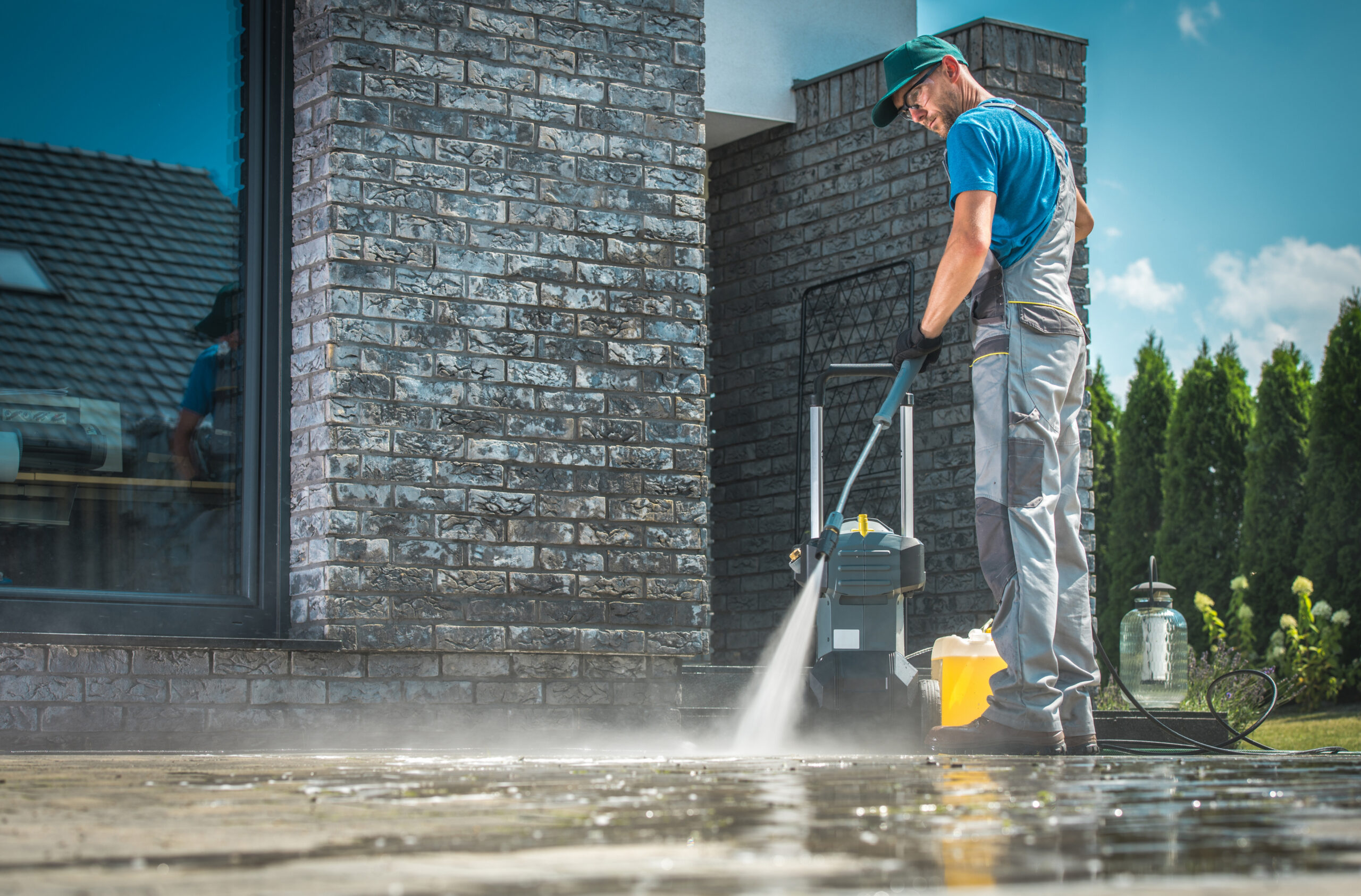
Homeowners often ask whether they should choose pressure washing or soft washing for their siding, roof, driveway, or outdoor surfaces. The two methods may look similar, but they work very differently and serve different purposes.
Knowing the difference helps protect your home, avoid damage, and get the longest-lasting results.
This guide explains both methods clearly and shows how professionals choose the safest approach for every surface.
Understanding Pressure Washing
Pressure washing uses high-pressure water to break apart dirt, oil, mildew, and surface buildup. It works by pushing water at a strong force, which allows it to lift stains that regular hoses cannot remove. This method is best for tough, durable materials that can handle strong power.
Common uses include concrete driveways, brick walkways, patios, stone surfaces, and retaining walls. These surfaces benefit from deep cleaning because they collect oil stains, tire marks, algae, and compacted dirt.
Pressure washing is fast and effective for large areas that need heavy cleaning, but it must be used carefully since high pressure can damage softer surfaces if not handled correctly.
Understanding Soft Washing
Soft washing is a gentler cleaning method. Instead of relying on strong force, it uses low-pressure water combined with specialized cleaning solutions that remove dirt, algae, moss, mold, and organic buildup. The solution does most of the cleaning, and the low-pressure rinses everything away safely.
Soft washing is ideal for roofs, vinyl siding, painted surfaces, stucco, wood decks, screened enclosures, fences, and delicate trim. It protects materials that could crack, peel, or warp under high pressure. It also kills organic growth at the root, which keeps surfaces clean for a longer time.
Professionals use soft washing on any surface where the goal is to clean gently, preserve the material, and avoid water intrusion.
Key Difference in One Simple Explanation
Pressure washing cleans with high force.
Soft washing cleans with low force and cleaning solutions.
Pressure washing removes stains from strong surfaces.
Soft washing safely treats delicate surfaces without causing damage.
This distinction helps determine the right method for each area of your home.
| Feature | Pressure Washing | Soft Washing |
| Water Pressure | High | Low |
| Cleaning Method | Force-powered | Solution-powered |
| Best For | Concrete, brick, stone | Roofs, siding, wood, stucco |
| Removes | Oil, dirt, tough stains | Algae, mold, mildew |
| Risk Level | Higher on soft surfaces | Very low when done properly |
| Longevity of Results | Moderate | Longer lasting due to treatment |
When Pressure Washing Is the Better Choice
Pressure washing is ideal for heavy-duty jobs where strength is needed. Concrete driveway stains, thick dirt on patios, and grime on brick walls respond well to a stronger water force. Surfaces that handle foot traffic, vehicles, and outdoor weather benefit from this method.
If your driveway has oil spots, if your sidewalk looks dark and stained, or if your patio has years of built-up dirt, pressure washing removes it quickly and efficiently.
When Soft Washing Is the Better Choice
Soft washing is the safest option for anything that can be damaged by strong pressure. Roof shingles need soft washing because high pressure can loosen granules and shorten roof life. Vinyl siding can crack under heavy force, and wood decks or fences can splinter if washed too aggressively.
Soft washing also treats algae and mold at the source, which means surfaces stay cleaner for a longer period compared to pressure-only cleaning.
Why Professionals Use Both Methods
A professional cleaning company evaluates each surface before choosing an approach. Using the wrong method can create problems such as chipped siding, roof damage, etched concrete, or water penetration. Experienced technicians know how to adjust pressure levels, apply cleaning solutions correctly, and keep surfaces safe.
At H2O Pressure Washing LLC, both methods are used on the same property when needed. A driveway might require pressure washing, while the siding and roof are cleaned with soft washing on the same visit.
Local Insight: What Works Best in Florida’s Climate
Homes in Green Cove Springs, Orange Park, Fleming Island, and surrounding Florida areas often experience algae growth due to humidity. This makes soft washing essential for siding and roofs because it removes organic growth fully rather than pushing it around.
Concrete driveways in Clay County neighborhoods also darken quickly due to rainfall and heat, which makes pressure washing highly effective for restoring curb appeal.
Adding this local relevance boosts ranking for your service area.
The Bottom Line
Pressure washing and soft washing both clean exterior surfaces, but they serve very different purposes. Pressure washing is best for strong materials like concrete and stone, while soft washing protects roofs, siding, and wood. Choosing the right method prevents damage and gives your home the cleanest, longest-lasting results.
H2O Pressure Washing LLC uses both methods to give every surface the care it needs. If you want safe, professional, and long-lasting exterior cleaning, contact the team for a free estimate and a personalized cleaning plan.
Frequently Asked Questions
Is soft washing safer than pressure washing?
Yes. Soft washing is safer for roofs, siding, wood, and delicate surfaces because it uses low pressure and solution-based cleaning.
Does soft washing kill algae?
Soft washing removes algae at the root, which keeps surfaces clean longer than pressure washing alone.
Can pressure washing damage siding?
It can if used incorrectly. High pressure can crack vinyl or push water behind panels. That is why professionals choose soft washing for siding.
How long do soft washing results last?
Soft washing typically lasts longer because the solution treats the underlying growth. Many homeowners see results that last one to three years, depending on weather conditions.
Additional Reads:
How to Choose the Right Pressure Washing Company
